


ALSACE
Organic, biodynamic and natural wines
Domaine Bohn
REICHSFELD
-
 Bernard et Arthur Bohn
Alsace
En Vrac13.00 € -

 Bernard et Arthur Bohn
Alsace
Muscat 202317.00 € -
 Bernard et Arthur Bohn
Alsace Riesling
Terroir de Schiste 202318.00 € -
 Bernard et Arthur Bohn
Alsace
Muscat Par NAthur 2020Original price was: 20.00 €.18.00 €Current price is: 18.00 €. -
 Bernard et Arthur Bohn
Crémant d’Alsace
Brut Nature zéro dosage19.00 € -
 Bernard et Arthur Bohn
Alsace Gewurztraminer
201820.00 € -
 Bernard et Arthur Bohn
Alsace Pinot Gris
Schieferberg 202125.00 € -
 Bernard et Arthur Bohn
Crémant d’Alsace
Extra Brut 201629.00 € -
 Bernard et Arthur Bohn
Alsace Riesling
Chapelle Oberhagel 202132.00 € -
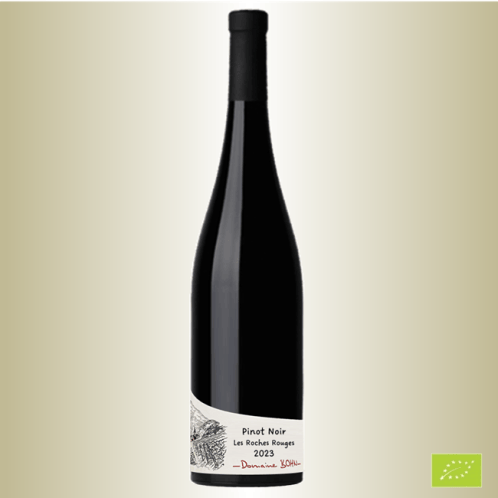 NewBernard et Arthur Bohn
Alsace Pinot Noir
Les Roches Rouges 202332.00 € -

 Bernard et Arthur Bohn
Eau-de-Vie
PoireOriginal price was: 50.00 €.45.00 €Current price is: 45.00 €. -
Bernard et Arthur Bohn, Eau-de-Vie MirabelleOriginal price was: 50.00 €.45.00 €Current price is: 45.00 €.
-
 Bernard et Arthur Bohn, Marc de GewurztraminerOriginal price was: 50.00 €.45.00 €Current price is: 45.00 €.
 -
 Bernard et Arthur Bohn, Eau-de-Vie KirschOriginal price was: 50.00 €.45.00 €Current price is: 45.00 €.
 -
 Bernard et Arthur Bohn
Alsace Pinot Gris
Sélection de Grains Nobles 199745.00 € -
 Bernard et Arthur Bohn
Whisky
HornockxOriginal price was: 75.00 €.67.50 €Current price is: 67.50 €.
Domaine Josmeyer
WINTZENHEIM
-
 Josmeyer
Alsace
Fleur de LotusOriginal price was: 18.00 €.16.20 €Current price is: 16.20 €. -
 Josmeyer
Alsace
Riesling Le Kottabe 2024Original price was: 28.00 €.25.20 €Current price is: 25.20 €.
Domaine Kreydenweiss
ANDLAU
-
 Domaine Kreydenweiss
Alsace
Lune à Boire rouge 2023Original price was: 18.00 €.16.20 €Current price is: 16.20 €. -
 Domaine Kreydenweiss
Alsace
Kritt 202320.00 €
Alsace: a pioneer in organic, biodynamic and natural wine-making
Since the early 1970s, Alsace has turned its attention to producing organic and biodynamic wines. With a third of its vineyards now organically farmed or in conversion (2022), Alsace leads the way in sustainable viticulture in France. This phenomenal surge has seen the emergence of winemakers such as the Weinbach and Josmeyer estates, and more recently the Arthur Bohn estate in Reichsfeld.
The appellations of Alsace wines
There are three wine appellations in Alsace:
- AOP Alsace
- AOP Alsace Grand Cru
- AOP Crémant d’Alsace
There are also 51 grands crus in Alsace, corresponding to terroirs defined according to geological and climatic criteria, and subject to strict production and winemaking standards (limited yields, hand-harvesting, use of a limited number of grape varieties).
The 51 Grand Crus of Alsace
- Altenberg in Bergbieten
- Altenberg in Bergheim
- Altenberg in Wolxheim
- Brand
- Bruderthal
- Eichberg
- Engelberg
- Florimont
- Frankenstein
- Froehn
- Principality
- Geisberg
- Gloeckelberg
- Goldert
- Habsburg
- Hengst
- Kaefferkopf
- Kanzlerberg
- Kastelberg
- Kessler
- Kirchberg-de-Barr
- Kirchberg in Ribeauvillé
- Kitterlé
- Mambourg
- Mandelberg
- Marckrain
- Moenchberg
- Muenchberg
- Ollwiller
- Osterberg
- Pfersigberg
- Pfingstberg
- Praelatenberg
- Rangen
- Rosacker
- Saering
- Schlossberg
- Schoenenbourg
- Sommerberg
- Sunshine
- Mirror
- Sporen
- Steinert
- Steingrubler
- Steinklotz
- Vorbourg
- Wiebelsberg
- Wineck-Schlossberg
- Winzenberg
- Zinnkoepflé
- Zotzenberg

The grape varieties used in Alsace wines
As mentioned earlier, Alsace is the only region to base its appellation on the name of a grape variety. There are 10 such appellations, only one of which is for a red wine: Pinot Noir.

The Riesling grape variety
All honour to whom honour is due: Alsace’s premier grape variety accounts for around 21% of the vineyard area. It is one of the most prestigious varieties. Liveliness, minerality and freshness are its main characteristics. Its aromatic profile ranges from citrusy lemon notes through floral hints to those famous, highly distinctive petrol notes. Above all, it is a wonderful expression of the terroir, capable of conveying all its nuances.
The Pinot Blanc grape variety (or Klevner)
It too accounts for around 21% of the planted area. Its aromatic profile is sometimes reminiscent of that of Chardonnay. However, it offers a more moderate acidity. It has a rounder, less crisp palate. Together with Auxerrois, it is used in most Crémants d’Alsace. It produces wines of lovely suppleness, expressing aromas of ripe orchard fruits (peach, pear, apple, etc.) and floral notes.
The Gewürztraminer grape variety
It is Alsace’s third most important grape variety, accounting for around 20% of the vineyard area. Its intense and unique bouquet ranges from fruit (lychee) to flowers (rose) and spices (its German etymological meaning). Its subtlety, structure and complexity are exceptional. In particular, it is used to produce late-harvest wines and ‘sélections de grains nobles’.
The Auxerrois grape variety
Richer, fuller-bodied and more oaky than Pinot Blanc, it is often blended with the latter to produce Crémants d’Alsace.
The Pinot Gris grape variety
Formerly known as Tokay-Pinot Gris, it accounts for around 15% of the total vineyard area. A grape with coppery berries, its origin varies between Hungary and Burgundy depending on the source. Primarily known for its susceptibility to noble rot, it is increasingly coming into its own in dry wines. It produces powerful wines with an aromatic complexity reminiscent of mushrooms, grapes and undergrowth. Sometimes slightly smoky.
The Sylvaner grape variety
All too often relegated to the status of a secondary grape variety, it is thought to originate from Austria. A late-ripening variety, it produces a dry, light, fresh and moderately structured wine. Its subtle aromatic profile evokes citrus fruits combined with aromas of white flowers or vegetal notes (cut grass). It thrives particularly well in the Mittelbergheim area. It is particularly interesting when used in maceration techniques, as at the Bohn estate in Resichsfeld.
The Muscat grape variety
Covering around 4% of the vineyard area, it would be more accurate to speak of two grape varieties rather than just one: the Small-Grained Muscat, also known as Muscat d’Alsace, and Muscat Ottonel. It can produce dry, aromatic wines (blackcurrant buds, elderflower) with a delightful flavour. Or more powerful, sweet wines from late harvests and noble grape selections. It then gives the sensation of biting into a bunch of grapes.
The Klevener grape variety from Heiligenstein
Also known as Savagnin Rose, it is mainly found in and around the village of Heiligenstein. It produces interesting wines that combine the acidity of Riesling, the aromatic intensity of Gewurztraminer and the richness of Pinot Gris.
The Chasselas grape variety
Although it is grown less and less, it produces fresh, light wines, often used in Edelzwicker or Crémant.
The Pinot Noir grape variety
Alsatian red wines are made exclusively from this grape variety, which accounts for just over 10% of the vineyard area. It is with Pinot Noir that Alsatian winegrowers have made the most notable progress. It offers aromas of red fruit, developing into notes of baked pear and black cherry when aged in oak barrels.
The climate of the Alsatian vineyards
The climate of the Alsace wine region is generally described as semi-continental (with cold winters and hot summers), though it has distinctive features due to an exceptional microclimate. The Vosges mountains shield the vineyards from oceanic influences; rainfall here is among the lowest in France.
Discover the wines of Alsace
With its history, its terroirs and its extraordinary range of white wines, Alsace holds a special place in the hearts of wine lovers. White wines (dry, sweet and crémant) account for nearly 90% of production, leaving Pinot Noir as the region’s sole source of red wines. It is France’s leading producer of white wines. It is also, and above all, through its unique approach of highlighting grape varieties alongside appellations that Alsace sets itself apart from other wine-producing regions. Although it should be noted that this practice leaves an increasingly large share to blended wines.
Geographical location of Alsace wines
Nestled against the foothills of the Vosges, the layout of the Alsatian vineyards is unique, to say the least. It consists of a long, narrow strip stretching 120 km from the Vosges foothills at Marlenheim in the north to Thann in the south. Added to this is the enclave of Wissembourg and Cleebourg, on the region’s northern border. The width of the vineyards rarely exceeds a few kilometres (averaging between 1km and 4km). The total area of the vineyards is around 15,000 hectares across the two departments of Haut-Rhin and Bas-Rhin.
The History of Alsace Wines
The Romans are credited with the earliest development of Alsace’s wine-growing history following their invasion of the Rhine. There is much less certainty regarding the emergence of commercial viticulture. The successive reigns of the Merovingians and Carolingians appear to have contributed to the development of viticulture. But it was really in the 16th century that things began to take off with the opening of the Rhine to river transport. This prosperity came to an end in the 17th century with the Thirty Years’ War. In the 19th century, and particularly from 1871 onwards following the annexation of Alsace by Germany, production experienced a new boom. Unfortunately, this was more about quantity than quality, with the advent of mass viticulture. The situation was exacerbated by phylloxera and the adoption of resistant but poor-quality hybrid grape varieties. From 1918, in the aftermath of the Second World War and Alsace’s return to France, a more quality-focused policy emerged. Production was based on noble grape varieties and rigorous cultivation methods. This long-term process of revitalisation culminated in 1945 with the introduction of the current regulations. The Alsace AOC was established in 1962, followed by Alsace Grand Cru in 1975.
The great diversity of Alsatian terroirs

The great variety of Alsatian terroirs is directly linked to the geological structure of the Rhine plain. More specifically, it stems from the collapse, 50 million years ago, of the upper part of a mountain range that once linked the Vosges and the Black Forest. The vineyards are mainly situated on the hills of the Southern Vosges, facing the rising sun (predominantly south-east facing). They stretch from 180 metres at plain level to around 400 metres at their highest point.
By taking root in these fault zones, the vines encounter an extremely diverse range of rock outcrops. The main terroirs found here are:

AT THE FOOT OF THE MOUNTAIN
1. Granite and gneiss soils
Located on the slopes of the Vosges mountains, granite and gneiss are igneous and magmatic rocks. These rocks are mainly composed of quartz crystals, feldspars and micas, which crack and break down to form a coarse-grained sand known as granite sand. These are soils with low water retention but rich in minerals. The fertility of these soils depends on their degree of weathering, which contributes to the release of minerals. These acidic soils produce wines that are very expressive in their youth, elegant, with great freshness, and floral aromas set against a light structure.
2. Schist soils
Schist is a laminated rock formed by the compression of clay within the Earth’s crust. These soils, which are rare in Alsace, are rich in nutrients. They are found mainly around Andlau, Villé and Reichsfeld (Schieferberg). They produce lively, structured and distinguished wines that take time to come into their own.
3. Volcanic-sedimentary soils
These rare soils in Alsace are formed from the consolidation of lava and volcanic ash (deposited by volcanoes 300 million years ago). These rocks are therefore quite hard and compact, and do not break down easily. Stony and dark, they retain heat well and bring out the best in the grape variety, producing full-bodied, well-structured wines with smoky aromas. Excellent ageing potential.
4. Sandy soils
These soils are formed by the aggregation or cementation of quartz sand grains. Geologically, they are quite similar to granitic terroirs, yet the wines they produce have a rather different profile. These wines generally exhibit a longer acidic backbone and a more subtle aromatic expression. Their finesse is immediately appealing, but their complexity takes a little time to unfold.
THE SOUS-VOSGIENNES HILLS
5. Limestone Terroirs: These stony soils with low water retention are composed of marine limestone dating from the Mesozoic era, primarily from the Muschelkalk and Dogger formations. These rocks weather easily, giving way to very stony soils. Rather closed in their youth, the wines develop citrusy aromatic characteristics of great finesse over time. Built on a broad, substantial acidic structure, their depth and balance make them wines with excellent ageing potential.
6. Marl-limestone terroirs: Composed of thick deposits of clay (marl) and limestone pebbles, which form a rock known as conglomerate; this rock evolves slowly and is not readily visible. These soils are very widespread in the vineyard and are particularly favourable. The marl imparts power underpinned by a lovely, long and complex acidity. The bouquet of the wines displays a certain complexity, blending fruit, floral notes and spices. The structure in its youth is at once generous, full-bodied and powerful. Over time, the higher the proportion of limestone, the more the wine develops finesse and minerality.
7. Marl-and-sandstone soils: A sandstone variant of the marl-and-limestone soil, where the pebbles are made of sandstone. The marl lends the wines power, whilst the sandstone lends them lightness. More generous than on an exclusively sandstone soil, the wine’s aromas are also more complex than on a marl soil. Characterised by liveliness and a fine structure.
8. Marl-limestone-sandstone terroirs: These fairly widespread soils consist of limestone, sandstone and clay. The variety of rock types contributes to the mineral richness of this terroir. Fairly deep and fertile, these soils have good water retention capacity. The Marne clay imparts power to the wines, whilst the limestone and sandstone lend finesse. These two somewhat contrasting characteristics require a little time to harmonise.
9. Calcareous-sandstone soils: Relatively rare in Alsace, these soils consist of calcareous sandstone (or limestone sandstone) in which the quartz grains are cemented together. They thus form a soil with low mineral fertility that undergoes virtually no weathering. The resulting wines are particularly floral, with notes of exotic fruit.
10. Clay-marl soils: These soils consist mainly of clay, a soft, compact rock that results in heavy, rich soils. They are highly fertile and have a high water-retention capacity. They give the wine a powerful structure (tannic character) and a distinct minerality that develops over time.
IN THE PLAINS
11. Colluvial and piedmont soils
Colluvial deposits are slope-foot deposits formed during the Quaternary period. They consist mainly of slope scree and alluvial fans in the Vosges valleys. The accumulated materials and mineralogical composition vary significantly depending on the bedrock of the hinterland. The wines produced on these terroirs therefore display variable profiles, tending to be aromatic (fruit, flowers) and of medium body.
12. Alluvial soils
Alluvial deposits are river deposits rich in pebbles, gravel, sand and silt. They accumulate in terraces, and the nature of the materials that make them up depends on the course of the rivers and their source. Although similar to the materials found in alluvial fans, they differ in that the sand and pebbles have a washed and sorted appearance. Fruity and harmonious, the wines from these terroirs are best enjoyed whilst young.
13. Loess and loam soils
Loess is a pale yellow silt deposited by the wind during the Ice Age. Its weathering at the surface gives rise to lehm, which is browner in colour and has a more clay-like texture. The thickness varies, ranging from thin layers to deposits several metres thick. The mineral character of the wines is best appreciated when young, with their freshness and finesse.